
Here’s a conversation we have almost every month. An owner tells us revenue’s up 40% over last year, the team’s grown, and yet they feel less sure about money than they did when the company was half the size. They’re not imagining it. Growth adds moving parts faster than most owners can track them: more payroll, more inventory, bigger vendor terms, a line of credit with covenants nobody reads.
That’s usually when someone suggests hiring a CFO. And that’s usually when the owner looks at the salary and winces. This is where fractional CFO services come in, and we want to explain honestly what they are, what they aren’t, and when they make sense.

What a fractional CFO actually does
A fractional CFO is a senior finance leader who works with your company part time. Maybe a few days a month, maybe a weekly call plus a monthly board style review. You get the judgment of someone who has run finance for many companies without carrying a full time executive salary.
What does that judgment look like in practice? Here are a few illustrative situations, the kind we see all the time:
- Picture a distributor in Doral about to sign a second warehouse lease. A 13 week cash forecast might show a cash low point landing right when their biggest customer stretches payment terms to 60 days. With that in hand, they can push the start date and avoid drawing on their line.
- Say you run a skincare brand and assume your best seller is your most profitable product. Load real freight, returns and payment fees by SKU and it can easily turn out to be fourth, which changes where your ad money should go.
- Imagine a family owned services firm that wants to bring in a minority investor. A CFO builds the model, tightens the story and sits in on the calls.
The cost question, with real numbers
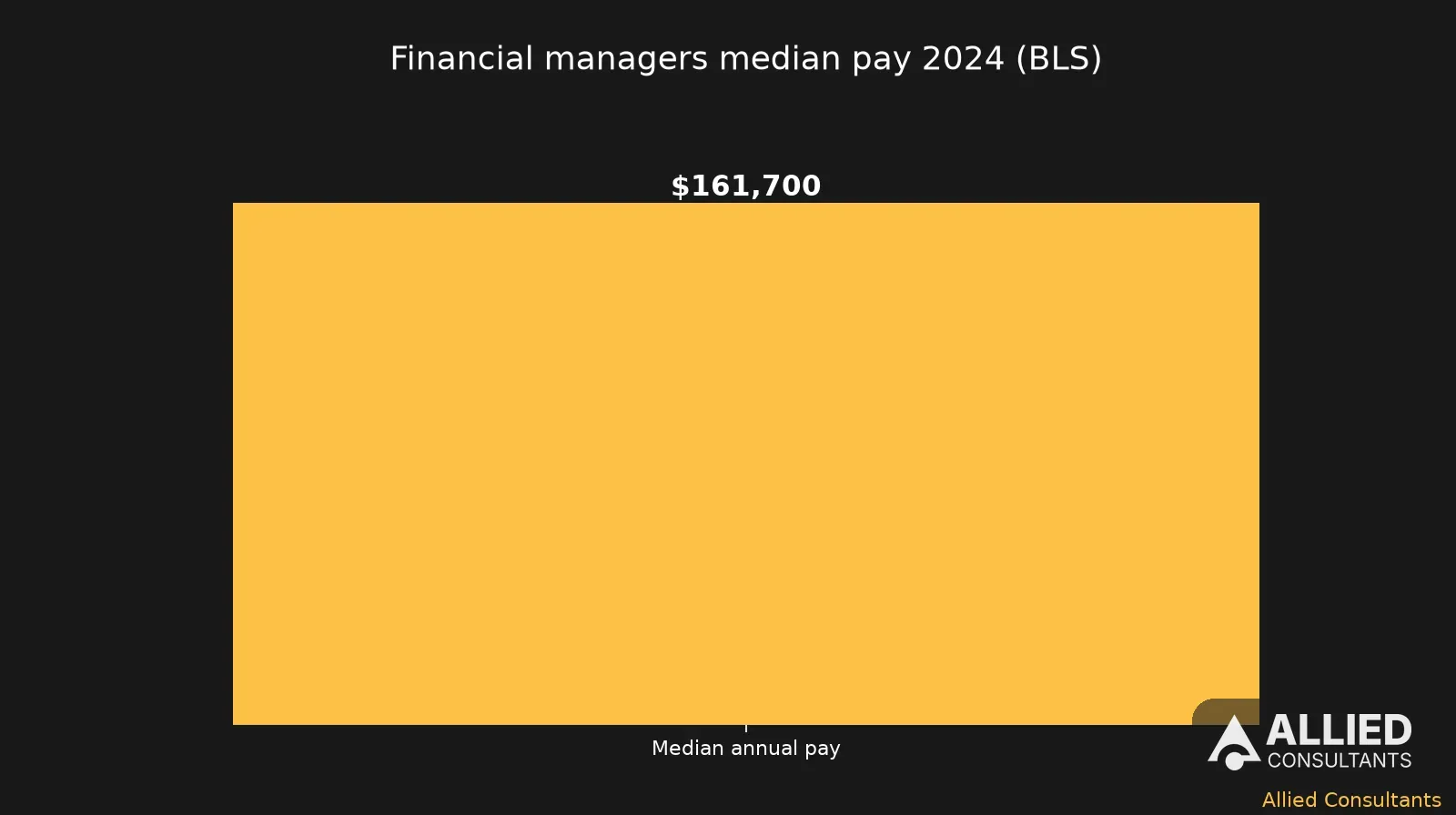
According to the Bureau of Labor Statistics, the median pay for financial managers was $161,700 in 2024. That’s the median for the whole category, which includes controllers and finance directors. Experienced CFOs at growing companies often cost more once you add bonus, benefits, payroll taxes and recruiting fees.
For a company doing $3 million to $25 million in revenue, that’s a big fixed cost for a role that may only need 30 or 40 hours of senior work a month. A fractional arrangement lets you pay for the hours that matter and scale up when something big happens, like a financing round or an acquisition.
| Factor | Full time CFO | Fractional CFO |
|---|---|---|
| Cost structure | Salary, bonus, benefits and taxes; BLS median pay for the broader category is $161,700 | Monthly retainer sized to the work |
| Time to start | Often months of recruiting | Usually within a couple of weeks |
| Breadth of experience | Deep in one company | Pattern recognition across many companies and industries |
| Flexibility | Fixed headcount | Scale hours up for a raise or deal, down afterward |
| Best fit | Larger companies with daily finance leadership needs | Small and midsize companies growing past the owner’s comfort zone |

Signs you’re ready for a fractional CFO
Not every business needs one. If you’re doing $400,000 a year with one location and a steady customer base, clean bookkeeping and a good tax advisor are probably plenty. But we’d start the conversation if any of these sound right:
You’re making big decisions without a forecast
Hiring five people, opening a location, launching on Amazon, buying a truck fleet. If those decisions are based on your bank balance today instead of a forward view, you’re flying without instruments.
Your lender or investor is asking harder questions
Covenant calculations, borrowing base certificates, investor updates. These need to be right, on time, and explained clearly. A missed covenant is a lot more expensive than a CFO’s monthly fee.
You’re thinking about buying or selling a business
Deals are where finance leadership earns its keep. If you’re on the buy side, we’ll often pair CFO support with a buy side quality of earnings review so you know exactly what you’re paying for. If you’re planning an exit in the next two or three years, the CFO work feeds directly into a sell side QoE and valuation, and that prep often shows up in the price.
Margins are shrinking and nobody knows why
This one’s common with product companies. Freight, discounts, shrink and slow moving stock all eat margin quietly. Fixing it usually means tightening inventory management alongside better reporting.
What a fractional CFO needs from you
A CFO is only as good as the numbers underneath. If the books are three months behind, the first job isn’t strategy; it’s catch up. That’s why many of our CFO clients also use our bookkeeping team, so the monthly close is done before the CFO review starts. It also means you’re not paying senior rates for someone to reconcile a credit card.
From the owner, we need about an hour a month for the review meeting, honest answers about goals, and willingness to hear things you might not love. Sometimes the answer is “don’t open that second location yet.” That’s a cheap lesson compared with the alternative.

A typical first 90 days
Every company’s different, but here’s roughly how our engagements unfold.
- Weeks 1 to 3: We review the books, bank relationships, contracts and existing reports. We ask a lot of questions. We find out what keeps you up at night.
- Weeks 4 to 6: We build a 13 week cash forecast and a simple KPI dashboard: gross margin, cash runway, receivables aging, and two or three metrics specific to your business.
- Weeks 7 to 12: We put together an annual budget or operating plan, set up a monthly review rhythm, and start tackling the biggest opportunity we found. That might be pricing, vendor terms, a financing package or margin by product line.
By the end of the quarter, you should be able to answer three questions without opening a spreadsheet: How much cash will we have in 90 days? Which parts of the business make money? What are we doing about the parts that don’t?
What it doesn’t replace
To be clear, a fractional CFO isn’t your tax preparer, and they’re not an auditor. We’ll work closely with your CPA, but filing returns is their job. We also won’t run your day to day accounts payable; that’s what a bookkeeping team or controller does. The CFO’s job is to look forward and help you make better calls.
Frequently asked questions
How much does a fractional CFO cost?
Fees are usually a monthly retainer based on scope and hours. It’s typically a fraction of a full time CFO, where BLS reports the broader financial manager category had a median pay of $161,700 in 2024 before benefits.
What size company needs a fractional CFO?
Most of our clients are growing small and midsize businesses, often between $2 million and $50 million in revenue, that need strategic finance help but not a full time executive.
Can a fractional CFO help me prepare for selling my business?
Yes. Exit preparation is one of the most valuable things a CFO does: cleaning up financials, documenting adjustments, building forecasts and getting ready for a buyer’s diligence team.
Want a second set of eyes on your numbers?
If you’re growing and the finance side feels a step behind, let’s talk. We’ll spend some time understanding your business and tell you honestly whether you need a CFO right now or not. Visit our fractional CFO page or contact us to set up a free consultation.
Book a Free Meeting with Allied Consultants
Tell us about your business and we will get back to you within one business day.


