
When an ecommerce founder tells us they’ve got an inventory problem, they usually mean one of two things. Either they’re out of their best seller for three weeks during peak season, or they’ve got a storage unit full of product nobody wants. Sometimes both at once. Neither one is really an inventory problem, though. It’s a visibility problem, and it shows up everywhere: in cash, in margins, and in how a buyer values the business someday.
Let’s walk through what good inventory management for ecommerce brands and product companies looks like, and how to tell where you’re losing money.

The size of the problem
Online selling keeps growing. The U.S. Census Bureau reports that ecommerce made up 17.1% of total U.S. retail sales in the second quarter of 2026, seasonally adjusted. More channels means more places for stock to hide: your own warehouse, a 3PL, Amazon fulfillment centers, a retail partner’s back room.
And getting it wrong is expensive across the industry. IHL Group’s research estimates that inventory distortion, meaning out of stocks plus overstocks, costs retailers about $1.7 trillion a year, or 6.2% of retail sales, and that out of stocks account for 65.6% of that total.
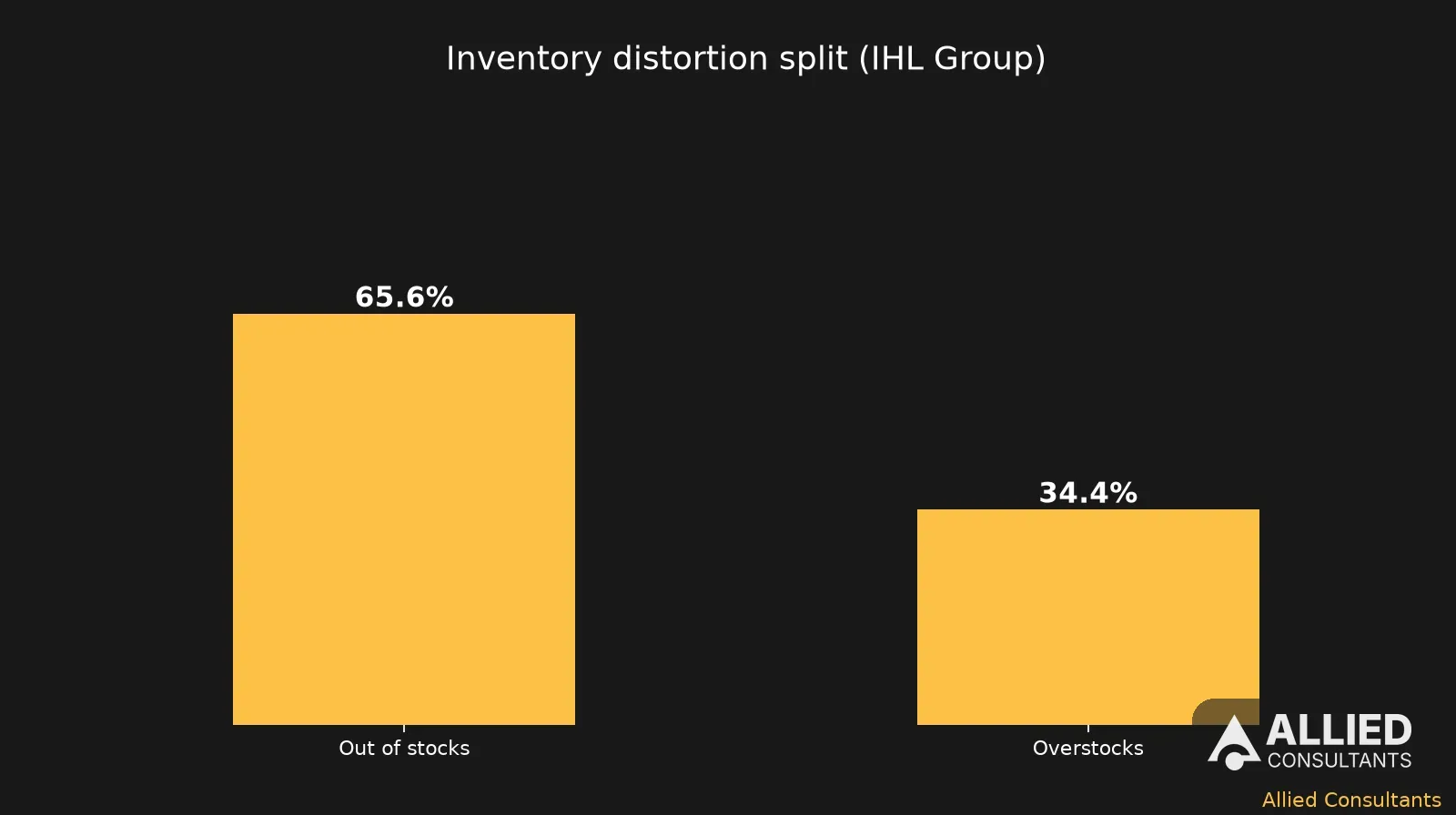
Think about what 6.2% of sales means for a brand doing $5 million. That’s roughly $310,000 a year walking out the door through lost sales and markdowns. Your number might be lower. It might be higher. The point is that most owners have never measured it.
Where small brands usually lose money
Stockouts on the products that matter
Running out of a hero SKU doesn’t just cost you that sale. On marketplaces it can drop your ranking, and when stock comes back you’re paying more for ads to climb back up. Picture an apparel brand that runs out of its core tee in three sizes right before a holiday weekend. The lost sales hurt, but the ad cost to recover rank afterward is often worse.
Cash tied up in slow movers
Every unit sitting on a shelf for nine months is cash you can’t use for payroll or the next production run. Overstock also costs storage fees, especially with marketplace fulfillment, and eventually forces discounts.
Cost of goods sold that’s basically a guess
If landed cost doesn’t include freight, duties and packaging, your margins look better than they are. It’s common for gross margin to drop several points once real landed costs are loaded. That’s not a rounding error. It changes which products you should be pushing.
Shrink and miscounts
Damaged goods, mispicks, returns that never got restocked, units a 3PL simply can’t find. Without regular cycle counts, those losses sit in your books as inventory that doesn’t exist.

The metrics we track for clients
You don’t need fifty KPIs. You need a handful that you look at every week and actually act on. These are the ones we set up first.
| Metric | What it tells you | What to do with it |
|---|---|---|
| Weeks of supply by SKU | How long current stock lasts at recent sales pace | Reorder before it falls below supplier lead time plus a buffer |
| Inventory turnover | How many times you sell through stock in a year | Low turns point to overbuying or weak demand |
| Sell through rate | Share of received units sold in a period | Spot launches that need a push or a markdown early |
| Landed cost per unit | True cost including freight, duty and packaging | Use it for pricing and real gross margin |
| Count accuracy | How closely system counts match physical counts | Below about 95%, fix receiving and picking processes |
| Aged inventory | Units older than 90, 180 and 365 days | Plan bundles, promotions or liquidation before value drops further |
How we fix it, step by step
- Get a true count. Before anything else, we reconcile what the system says against what’s physically there, across every location and channel.
- Rebuild landed costs. We pull freight invoices, duty entries and packaging costs and assign them to SKUs properly.
- Classify the catalog. Usually an ABC breakdown: the A items that drive most revenue get tight attention, C items get simpler rules.
- Set reorder points. Based on actual sales velocity, supplier lead times and how much risk you’re willing to take on stockouts.
- Connect it to the books. Inventory value and COGS should flow into your financials every month, not once a year at tax time.
- Set a cycle count routine. Small weekly counts beat one painful annual count every time.
Step five is where a lot of brands fall apart. If your inventory system and your accounting don’t talk, your P&L is wrong every single month. That’s why our inventory work usually runs alongside our bookkeeping team, so the numbers match.

Inventory and the bigger financial picture
Inventory decisions are cash decisions. A big production order in spring can leave you tight in summer, even if sales are strong. A fractional CFO ties your purchasing plan into a cash forecast so you know how much you can afford to buy and when.
It also matters at exit time. Inventory is one of the first places a buyer’s diligence team digs. They’ll test counts, question reserves for obsolete stock, and look hard at how you calculate COGS. Owners preparing for a sale get ahead of that with a sell side QoE and valuation. If you’re the one buying a product company, our buy side QoE work includes a close look at whether the inventory on the balance sheet is real and sellable.
Tools are the easy part
Owners often want to start by picking software. We get it, it feels like progress. But a new system on top of bad counts and fuzzy processes just gives you wrong numbers faster. We’d rather get the process right first, then pick the tool that fits your size and channels. Sometimes that’s a dedicated inventory platform. Sometimes it’s what you already have, set up properly.
Frequently asked questions
What is a good inventory turnover rate for ecommerce?
It depends heavily on category. Fashion and consumables often turn faster than furniture or equipment. The better question is whether your turnover is improving and whether aged stock is shrinking.
How often should I count inventory?
We recommend weekly or monthly cycle counts of your most important SKUs, with a full count at least once a year. Regular small counts catch problems before they pile up.
How does inventory affect my profit and loss?
Inventory you sell becomes cost of goods sold. If counts or landed costs are wrong, COGS is wrong, so your gross margin and net profit are wrong too.
Let’s find out where your stock is costing you
If you’ve got cash sitting on shelves or keep running out of what sells, we’d like to help. We’ll walk through your setup and point out the biggest opportunities, free. Learn more on our inventory management page or get in touch with our team.
Book a Free Meeting with Allied Consultants
Tell us about your business and we will get back to you within one business day.


